
That gap between "no specific rule" and "still enforceable" is exactly where documented inspections earn their keep. Skip the paperwork, and you're exposed regardless of how careful your drivers are.
This guide walks through a step-by-step OSHA liftgate inspection process: the tools you need, three practical inspection methods, how to read your results, and the mistakes that turn a routine check into a liability.
TL;DR
- No dedicated OSHA liftgate standard exists — enforcement runs through the General Duty Clause (Section 5(a)(1))
- Daily pre-trip checks should cover structural, hydraulic, electrical, and safety components
- Dated, signed inspection logs prove compliance during an audit
- Knowing normal vs. out-of-spec readings prevents injuries and costly downtime
- Hydraulic or structural defects found on inspection require a qualified pro—CUES, Inc. handles liftgate repair and inspection
What You Need to Check Liftgate Safety
Before you cycle a liftgate, get your tools and setup right. A rushed check on unstable ground produces false readings and false confidence.
Tools and Indicators Required
Keep this short list on hand for every inspection:
- Flashlight (for hinges, welds, and dark undercarriage areas)
- Tape measure
- Rated capacity chart or decal reference
- PPE: gloves and eye protection
- Inspection log or checklist, digital or paper
Preconditions and Setup
Three conditions have to be true before you touch the controls:
- Vehicle is parked on level ground and braked. Cycling on a slope skews load behavior and can cause the platform to drift unevenly.
- Platform is clear of ice, snow, or debris. Debris under a hinge can mask or mimic mechanical binding.
- Lighting is adequate. Cracks, hairline leaks, and frayed straps hide easily in shadow.
Missing any one of these three steps invalidates the rest of your inspection, even if every component technically checks out.

Methods to Check Liftgate Safety
There are three ways to inspect a liftgate, and each catches something the others miss. Use them together, not as substitutes.
Method 1: Visual Structural Inspection
Description: A hands-on check of the platform, hinges, and pivot points for physical damage.
Tools needed: Flashlight, tape measure.
Steps:
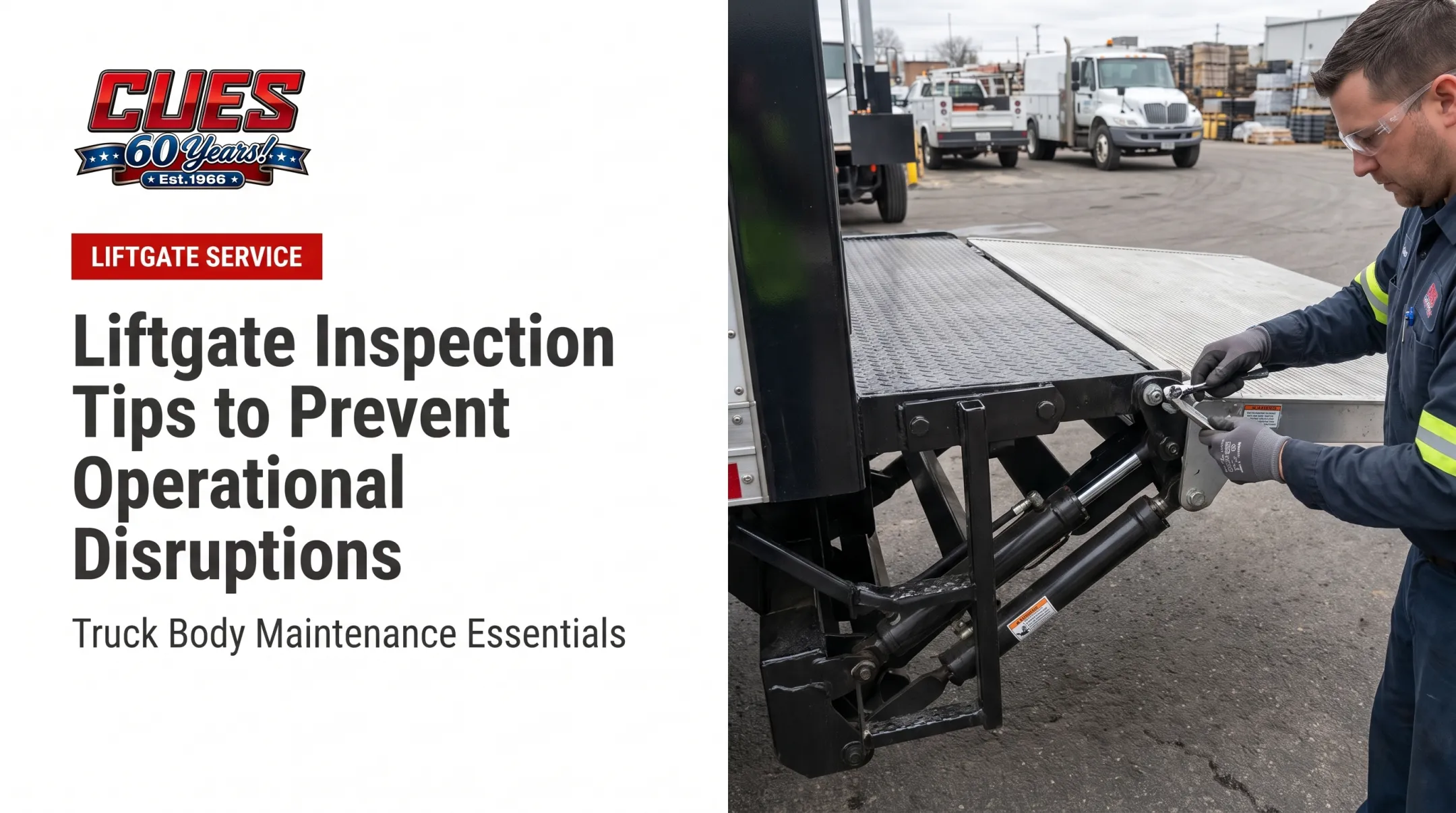
- Inspect the platform surface for cracks, bends, corrosion, or worn non-slip coating.
- Check hinges and pivot points for looseness or metal fatigue.
- Verify mounting points and warning decals are secure and legible.
Pros & cons: Fast and requires no special equipment, but it won't catch internal hydraulic or electrical faults hiding behind clean metal.
Method 2: Functional/Operational Cycle Test
Description: Run the liftgate through a full up-down cycle to observe hydraulic and electrical performance during operation.
Tools needed: Control switches, rated capacity chart.
Steps:
- Test up, down, and stop controls for an immediate, clean response.
- Cycle the platform fully, watching for leaks, drift, or unusual noise.
- Confirm smooth, level movement with no sudden drops.
Pros & cons: Best method for catching hydraulic and electrical issues before they fail on the road. It does require an operational, stationary vehicle to run properly.

Some liftgates, including Tommy Gate's G2 Series, build in a flow control valve designed to prevent uncontrolled descent and a pressure relief valve meant to guard against platform overload. A cycle test is how you confirm those safeguards still work; the valves alone are not a substitute for the test.
Method 3: Load Rating and Capacity Verification
Description: Confirm actual loads never exceed the manufacturer's rated capacity plate.
Tools needed: Capacity chart/plate, scale if available.
Steps:
- Locate and read the rated capacity plate.
- Compare typical load weights against that rating.
- Flag any recurring overloading patterns for driver retraining.
Pros & cons: Critical for preventing overload failures, but it depends on accurate field weight estimates. A rough guess does not count as verification.
Capacity ratings vary widely by model, so never assume. Tommy Gate liftgates alone range from 1,000 to 1,600 pounds depending on configuration. Read the decal on the actual unit, every time.

How to Interpret the Results
A misread crack or delayed control response can lead to a serious injury or an OSHA citation, not just a failed log entry.
| Result | What you'll see | Action |
|---|---|---|
| Normal/Acceptable | Smooth cycling, no leaks, secure latches, legible decals | Log as "pass," clear for use |
| Minor Issues | Slight surface wear, minor slow response, faded (but legible) decals | Note in log, schedule near-term maintenance |
| Out-of-Spec | Visible cracks, hydraulic leaks, unresponsive controls, missing safety features | Take out of service immediately, route to professional repair |
When findings land in that out-of-spec row, take the gate out of service. Do not work around the defect. CUES, Inc. handles hydraulic cylinder repair, electrical faults, and structural issues before the unit returns to rotation.

Common Errors in Checking Liftgate Safety
Even experienced crews fall into predictable traps:
- Skipping the daily pre-trip check when the yard is busy — hazards stay undocumented until the equipment fails in the field
- Failing to stabilize the vehicle before cycling the platform — unbraked or on uneven ground, readings are unreliable from the start
- Overlooking documentation — an inspection without a dated, signed record does not count toward OSHA compliance, no matter how thorough the check was
Build the sign-off into the same workflow as the physical check so the record is finished before the truck leaves the yard.
Safety and Best Practices
Build these habits into daily operations, not just formal audits:
- Lockout/tagout the power source before servicing hydraulic or electrical components.
- Wear PPE — gloves and eye protection — when inspecting hydraulic lines or battery connections.
- Keep hands and feet clear of pinch points where the platform meets the truck bed.
- Restrict operation to trained, documented operators only.
These aren't optional add-ons. They're the difference between a controlled inspection and an incident report.
Conclusion
OSHA enforces liftgate safety through the General Duty Clause, not a dedicated rule — which makes a documented daily inspection your strongest protection against both citations and injuries. A reliable check catches cracked welds, hydraulic leaks, and worn straps before they turn into failures on the road.
When an inspection turns up structural or hydraulic problems, working with an experienced provider minimizes downtime and keeps equipment compliant. CUES, Inc. has served New England and New York with sales, service, and parts for aerial devices and truck equipment since 1966. Its service department handles hydraulic cylinder repair, electrical faults, and liftgate safety inspections directly.
Frequently Asked Questions
What are the main points of the visual inspection of a liftgate?
A visual inspection covers the platform surface, hinges, hydraulic lines, electrical wiring, warning decals, and safety features. You're checking each for cracks, leaks, or wear before the gate ever gets cycled.
How much does it cost to put a liftgate on a truck?
Installation costs vary widely based on liftgate type, capacity, and truck size. Contact CUES, Inc. for a quote specific to your vehicle and application.
What's the difference between a liftgate and a tailgate?
A tailgate is a fixed panel that simply drops down. A liftgate is a powered platform that raises and lowers cargo, with different safety and inspection requirements.
Does OSHA have a specific standard for truck liftgates?
No single OSHA standard exists for truck liftgates. They're regulated under the General Duty Clause, which requires equipment free of recognized hazards.
How often should liftgates be inspected?
Liftgates should get a daily pre-trip check, plus routine preventive maintenance following the manufacturer's guidelines for your specific model.
What happens if a liftgate fails its daily inspection?
Take it out of service immediately. Don't attempt to run it "just this once" — route it to a qualified technician for repair before it's used again.