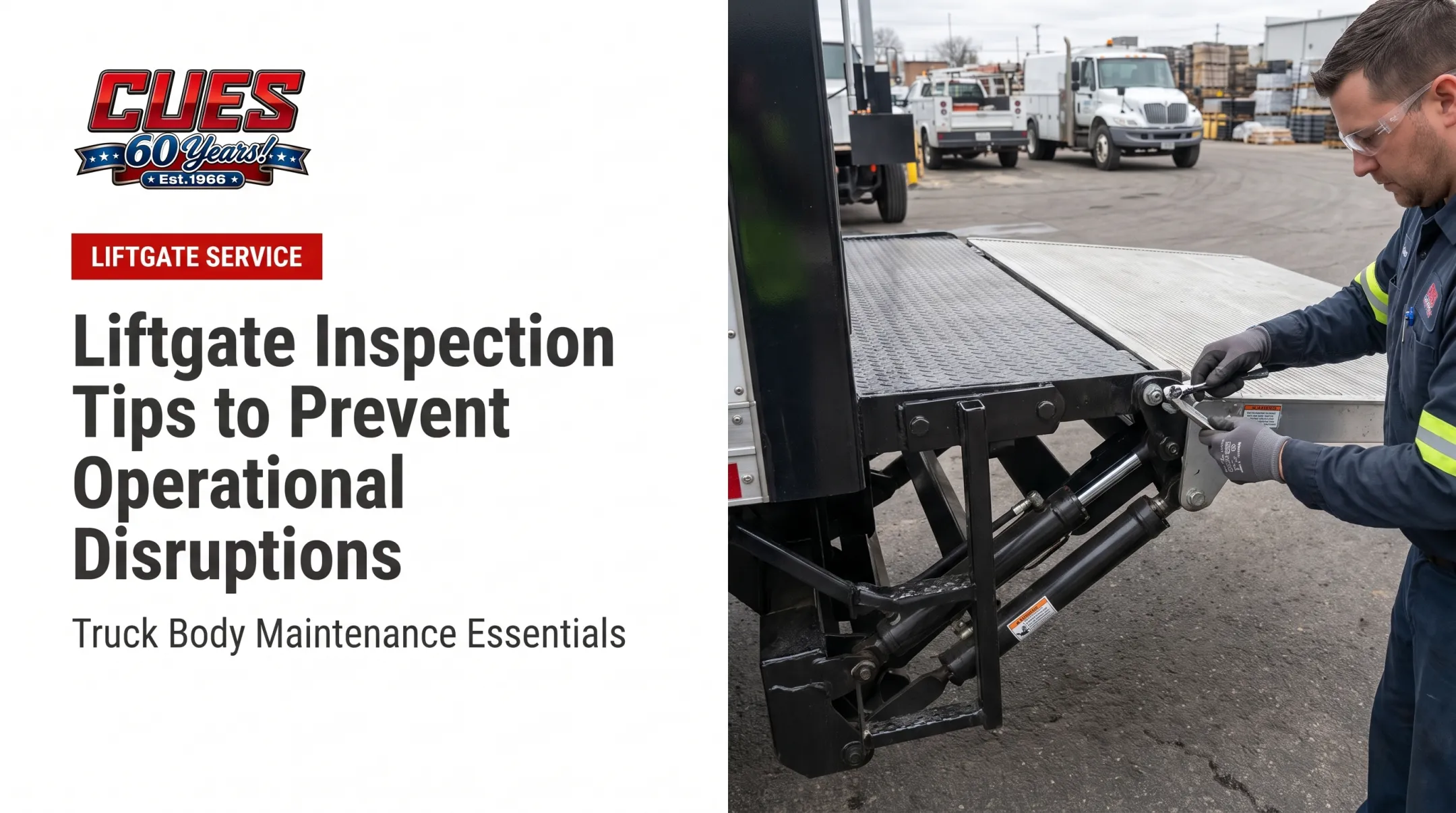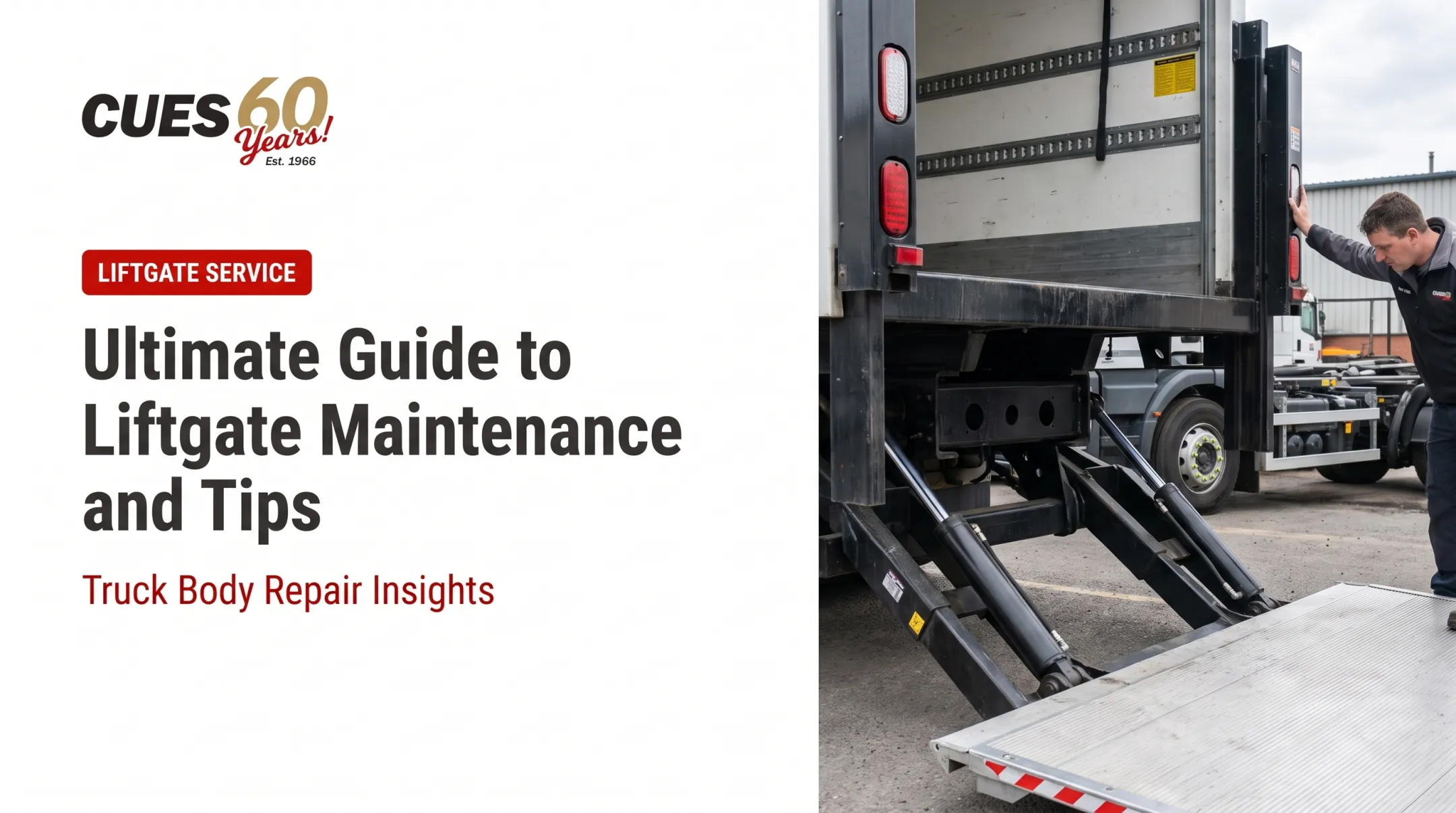

Electrical faults rank among the most disruptive liftgate issues fleets face. Corrosion, weak batteries, worn switches, and damaged wiring cause the bulk of failures — and most follow predictable patterns once you know where to look.
This article walks through the common electrical problems, why they happen, how to troubleshoot them step by step, and when it makes more sense to replace a component than repair it.
TL;DR
- Most common culprits: dead/weak batteries, faulty control switches, corroded wiring, blown fuses, and failed solenoids
- Troubleshooting basics: check power supply, test the switch, inspect wiring connections
- Fixable or not? Most issues are repairable early; widespread wiring damage or aging systems may need replacement
- When to call a pro: persistent faults, aerial equipment, or safety-critical components
What Is a Liftgate Electrical System?
A liftgate's electrical system is the network of batteries, wiring, switches, solenoids, and control units that power hydraulic lift operation. Power flows in a straightforward path: from the truck battery, through fuses and relays, to the control switch, then to the solenoid that activates the hydraulic pump.
It's a simple circuit in theory. In practice, it takes a beating.
Connections wear down from:
- Vibration from daily driving
- Moisture from weather and washing
- Constant heavy-duty cycling
That's why liftgate manufacturers like Thieman and Maxon build inspection schedules directly into their service manuals—some calling for monthly checks, others tied to cycle counts as low as 1,250 cycles. Skipping those checks is where most electrical trouble starts.
Common Electrical Problems With Liftgates
Most electrical failures trace back to power supply, connections, or controls. Here's what typically goes wrong.
Dead or Weak Battery
Symptoms: Slow or unresponsive lift, or clicking with no movement.
Likely cause: Battery drain, an aging battery that won't hold a charge, or alternator charging problems. Manufacturer troubleshooting guides for the Thieman TVLR 30 specifically list undercharged or defective batteries as a top suspect when the pump motor won't run.
Faulty Control Switch
Symptoms: Intermittent operation, or no response to pendant or switch presses.
Likely cause: Worn internal contacts from weather exposure, or physical damage from dropped or stepped-on pendants. Switches are exposed to the elements constantly, so they fail more often than most other controls.
Corroded or Damaged Wiring
Symptoms: Intermittent power loss, or the gate cutting out mid-cycle.
Likely cause: Moisture intrusion, chafed insulation, or connections that have loosened from vibration. Maxon's service documentation specifically directs technicians to inspect wiring for chafing and keep connections tight and free of corrosion during routine maintenance.
Blown Fuses or Failed Relays/Solenoids
Symptoms: Complete electrical failure — no response at all.
Likely cause: Electrical overload, a short circuit, or solenoid burnout from repeated cycling. A blown 20-amp fuse or failed circuit breaker can shut the whole system down instantly.

Why Liftgate Electrical Systems Fail (Root Causes)
Electrical failures rarely come out of nowhere. They build up from everyday conditions:
- Vibration and road stress loosen connectors and wiring over time
- Rain, wash-downs, and temperature extremes degrade protective coatings; Thieman's manual warns that skipping lubricants and protectants after washing speeds up corrosion
- Improper wiring repairs or aftermarket parts introduce weak points into the circuit
- Skipped inspections and battery maintenance let small issues turn into failures
Left unaddressed, these conditions lead to real consequences:
- Complete liftgate failure mid-operation
- Safety risks during loading and unloading
- Potential DOT compliance issues under general unsafe-operation rules (49 CFR 396.7 prohibits operating a vehicle in a condition likely to cause a breakdown)
- Costly emergency repairs and unplanned fleet downtime

How to Fix Liftgate Electrical Issues (Step-by-Step)
Guessing at repairs without a proper diagnosis usually means replacing the wrong part and facing the same failure a month later. This process isolates the actual fault before any wrenches come out.
Step 1: Identify the Exact Problem
- Observe the symptom: no response, intermittent operation, or clicking without movement
- Note when it happens: cold starts, under load, or after continuous use
- Look for visible signs like corrosion, frayed wires, or a burnt fuse
Step 2: Confirm the Root Cause
- Test battery voltage at the control box with a multimeter (Thieman specs call for at least 12.5V at rest; always verify against your model’s manual)
- Check continuity on the control switch when pressed vs. released
- Inspect the wiring harness at pivot points and connection joints for corrosion
- Rule out hydraulic causes before assuming an electrical fault
Step 3: Apply the Fix
| Problem Area | Typical Fix |
|---|---|
| Battery/Power | Charge or replace battery, check alternator output, clean terminals |
| Switch | Clean contacts or replace faulty pendant/control switch |
| Wiring | Repair or replace corroded sections, reseal connectors against moisture |
| Fuse/Solenoid | Replace blown fuses with correct amperage, swap failed solenoids |
Step 4: Test and Validate the Fix
- Cycle the liftgate through multiple full up/down operations
- Confirm consistent voltage and response under load
- Watch for heat, intermittent cutout, or voltage drop over the next few days of use

When Should You Fix vs Replace Liftgate Electrical Components?
The right call depends on the scope of the damage, the truck's age, and how much downtime you can afford.
Minor issue (single switch or fuse):
- Fix: Inexpensive, quick replacement usually restores function
- Replace: Rarely needed unless the part is discontinued
Widespread wiring damage:
- Fix: Viable if harness sections are still available
- Replace: A full harness swap is often more reliable over the long haul
Aging liftgate (10+ years) with recurring electrical faults:
- Fix: Temporary patches add up in cost over time
- Replace: A newer liftgate unit may cost less than repeated repairs

CUES, Inc.'s parts team can help track down hard-to-find components across many years, makes, and models. That support matters when repairing an older liftgate looks more practical than a full replacement.
Preventive Maintenance and When to Call a Professional
Routine electrical checks cut downtime and help fleets meet safety expectations. A few habits go a long way:
- Check battery terminals monthly for corrosion and tightness
- Inspect wiring at pivot points quarterly for chafing or loose connections
- Keep switches clean and dry, especially after washing the truck
Persistent or complex electrical faults—particularly on aerial devices and utility trucks—call for a certified technician.
CUES, Inc. provides liftgate electrical repair, hydraulic liftgate repair, cylinder repair and replacement, and routine liftgate maintenance across New England and New York. Fully stocked road-service trucks come to your location to cut fleet downtime.
Conclusion
Most liftgate electrical issues are fixable when they're diagnosed correctly and caught early. Systematic troubleshooting, rather than guesswork, prevents the repeat failures that eat into fleet uptime. Knowing when to repair versus replace protects both your budget and your crew's safety on the job. When a fault goes beyond basic checks, a qualified liftgate technician can confirm the root cause and get the unit back in service safely.
Frequently Asked Questions
Why isn't my power liftgate working?
The most common causes are a weak or dead battery, a blown fuse, a faulty control switch, or corroded wiring. Start with the power supply, then work through the switch and connections.
How do I test a liftgate control switch?
Use a multimeter to check for continuity when the switch is pressed versus released. If there's no continuity when activated, replace the switch.
Can I repair liftgate wiring myself?
Simple fixes like cleaning corroded terminals are doable for most crews. Complex wiring repairs or anything involving safety-critical components should go to a professional technician.
How often should liftgate electrical systems be inspected?
Manufacturer schedules vary, but many recommend monthly connection checks and quarterly deeper inspections. Always follow the interval listed in your specific liftgate's manual.
What's the difference between a hydraulic and electrical liftgate problem?
Hydraulic issues typically cause slow, uneven, or partial movement while the motor still runs. Electrical issues usually cause no response at all, or clicking without any movement.
Is it safe to drive with a malfunctioning liftgate?
Only if it's properly secured and stowed. An improperly stowed liftgate can violate DOT safe-operation rules and create a road hazard.