
Skip maintenance long enough, and you're not just risking a stuck platform. You're looking at unplanned downtime, expensive hydraulic or electrical repairs, and real safety hazards for drivers and anyone standing near the truck. OSHA's incident records include fatal injuries tied to falling liftgates, which underscores why this isn't just an equipment issue.
This guide covers the types of liftgate maintenance, warning signs you shouldn't ignore, a general maintenance schedule, and the mistakes that turn small problems into major repairs.
TL;DR
- Liftgate maintenance protects safety, uptime, and total cost of ownership
- Electrical and hydraulic issues cause most liftgate failures
- Routine inspections, lubrication, and fluid checks prevent most breakdowns
- Maintenance frequency should scale with usage — daily, weekly, monthly, annual
- Complex hydraulic, electrical, or structural repairs need trained technicians
Why Liftgate Maintenance Is Important
A liftgate that's properly maintained lifts smoothly, cycles at a consistent speed, and responds predictably to controls. One that's neglected starts slow, jerks unevenly, or hesitates mid-cycle: early signs of hydraulic or electrical wear.
Regular upkeep extends equipment life. Routine lubrication and fluid changes reduce wear on cylinders, chains, and platform linkages, delaying the kind of major overhaul that pulls a truck off the road for days.
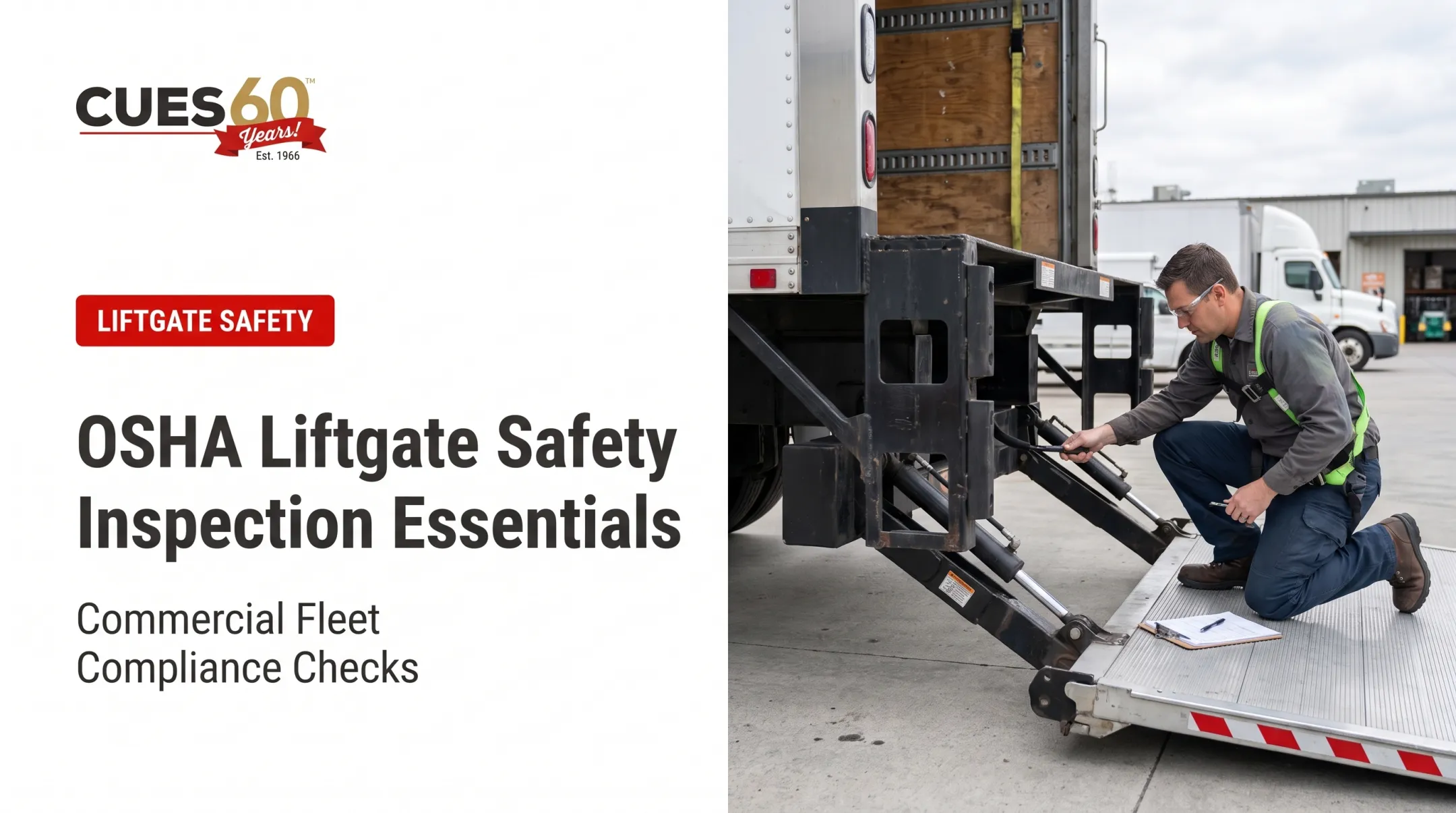
Safety is the bigger issue. OSHA liftgate incident records document serious injuries and fatalities tied to falling platforms and falls from the gate. Those cases are why inspections matter as much as any performance metric.
On cost, the same rule that applies to other fleet equipment holds here: catching a worn pin or a small hydraulic leak on a scheduled check costs far less than an emergency service call after the gate fails mid-route.
Types of Liftgate Maintenance
Not every liftgate needs the same care. A tuck-away gate cycling 20 times a day needs more attention than a cantilever gate used twice a week. Here's how the categories break down.
Routine / Preventive Maintenance
- Weekly or bi-weekly visual inspections
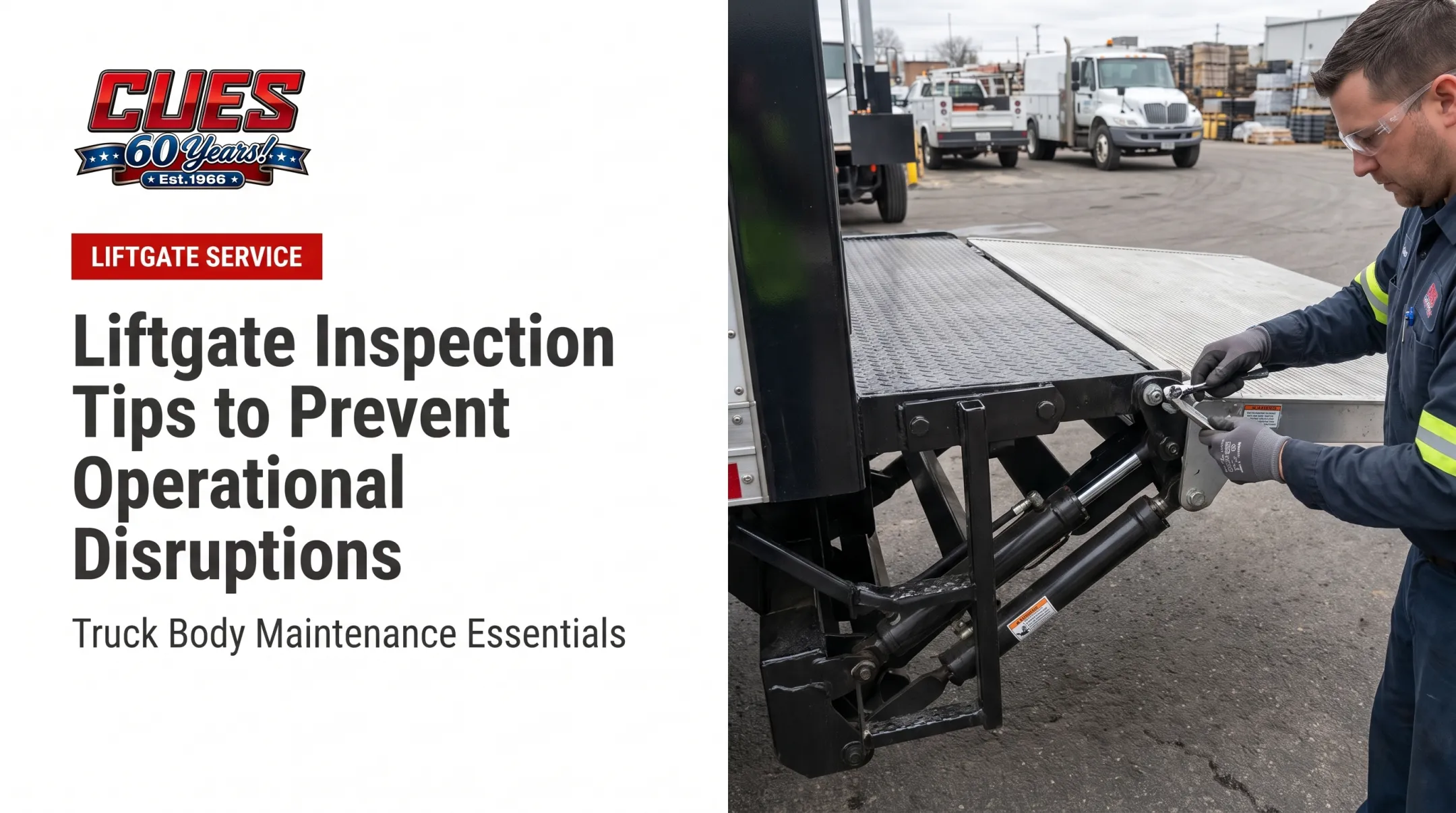
- Lubrication of hinges, pins, and rollers
- Best suited to low-to-moderate use gates with no visible wear
- Low cost—mostly oil, grease, and labor time
Corrective / Reactive Maintenance
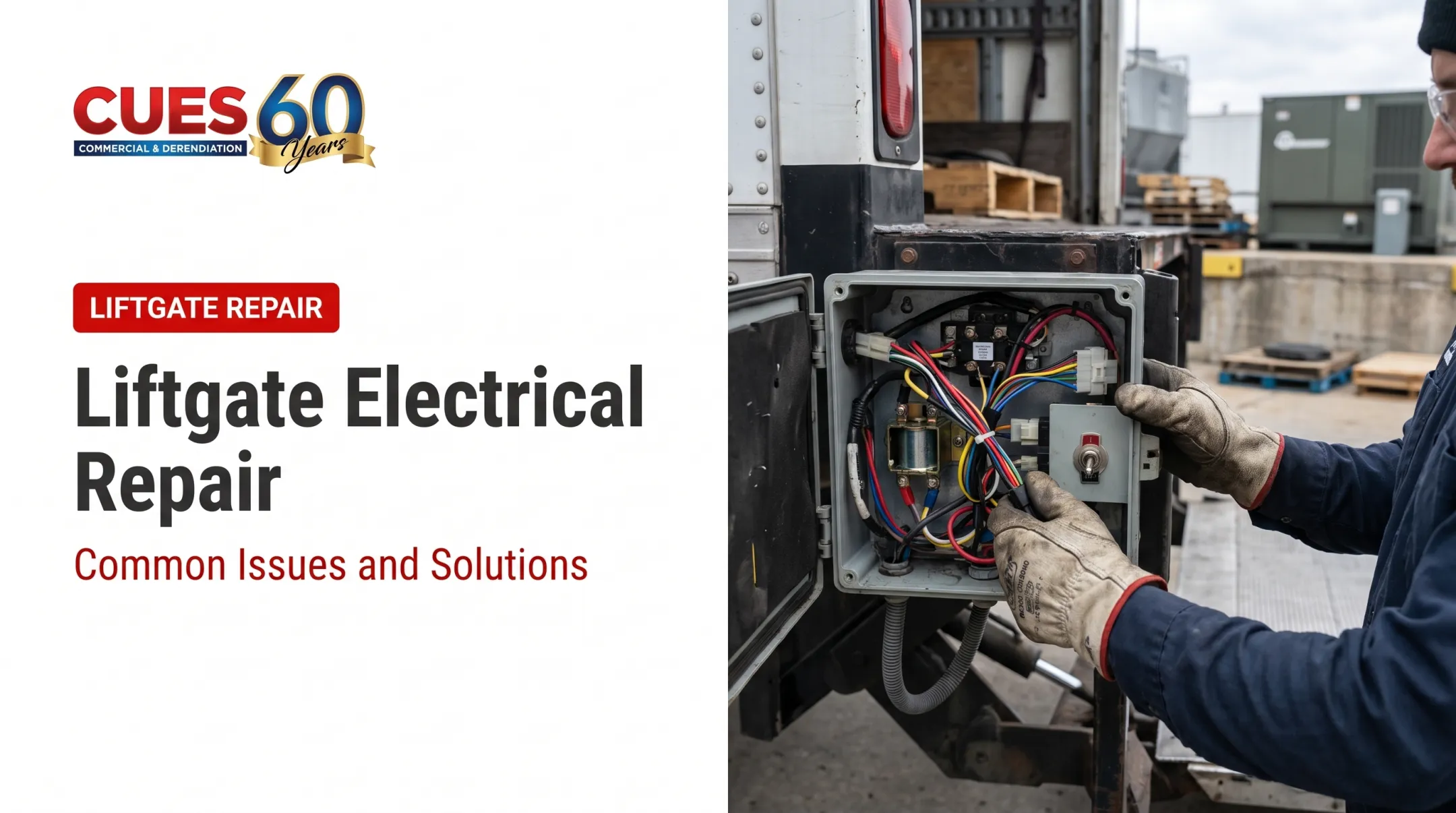
Triggered by a hydraulic leak, an electrical fault, or a driver reporting a strange noise. According to a 2024 Fleet Maintenance industry report, electrical issues (especially faulty switches and motor solenoids) are the top cause of liftgate failure. Hydraulic valves, coils, and leaking cylinders rank close behind. The risk with relying only on reactive maintenance: a loose wire or worn pin left unchecked escalates into a full breakdown, and by then you're paying for an emergency call plus parts.
Predictive / Condition-Based Maintenance
Monitoring hydraulic pressure, cycle counts, and battery health with diagnostic tools or telematics sensors. This approach flags failures before they happen, which matters most for high-cycle fleets running gates dozens of times a day. It takes more upfront investment in monitoring equipment, but it cuts emergency repair spend over time.
Major / Overhaul Maintenance
Deep servicing like hydraulic pump rebuilds, structural welding, or full chain replacement. This tier usually follows a collision, extended heavy use, or corrosion that's compromised structural integrity. Costs run high. Send this work to a certified technician or authorized service center, not a DIY fix.

How to Check If Your Liftgate Needs Maintenance
Think of these as your liftgate's warning lights. Catch them early, and you avoid the bigger repair bill down the line.
Performance Changes
- Slow raising or lowering, often signaling low hydraulic fluid or trapped air
- Inconsistent lifting capacity compared to the rated load
- Platform that fails to hold position or settles under load
Unusual Behavior or Operation
- Grinding, squealing, or banging noises during operation
- Erratic or unresponsive controls, which often points to an electrical fault rather than a mechanical one
- Platform drift when the truck is parked, a common hydraulic symptom
Visible Wear or Damage
- Hydraulic fluid leaks, cracked welds, or bent platform components
- Rust or corrosion on exposed metal, particularly common in road-salt regions
- Worn pins, hinges, rollers, or frayed lift cables
Recurring Issues or Downtime
- The same minor fault returns after a temporary fix (loose wire, weak battery, low fluid top-off)
- Downtime intervals get shorter between service calls

When quick patches stop holding, schedule a professional diagnosis before the next roadside failure.
Liftgate Maintenance Schedule (General Guidelines)
Exact intervals vary by brand. Tommy Gate recommends checks every 120 days or 1,500 cycles, while Waltco's PTN model calls for service every 6 months or 3,000 cycles. Maxon splits the difference with quarterly and semiannual triggers depending on the model. Always check your specific liftgate's manual before setting a schedule.
| Frequency | Task |
|---|---|
| Daily/per-use | Pre-trip visual check for damage, loose bolts, fluid leaks |
| Weekly/bi-weekly | Lubricate hinges, pins, rollers; check for wear |
| Monthly/quarterly | Hydraulic fluid level and pressure checks; inspect electrical connections |
| Annual/long-term | Full load testing, chain replacement evaluation, professional PM service |
Usage and climate matter. High-cycle roller-drive railgates, for example, need less frequent service than standard models. Trucks running in road-salt or coastal regions should inspect more often. Corrosion accelerates wear on exposed metal parts far faster than in dry climates.

For anything beyond routine upkeep (hydraulic pump work, electrical diagnostics, or structural repair), rely on a provider with certified technicians and mobile road service. CUES, Inc. sends fully stocked service trucks to your location for hydraulic liftgate repair, cylinder replacement, and electrical diagnostics. That cuts the downtime that comes from towing equipment to a shop.

Conclusion
If you run a fleet, liftgate maintenance keeps trucks on the road and drivers safe. Blend routine upkeep you can handle in-house with a clear line for when hydraulic or electrical issues need a trained technician.
Build a structured maintenance plan now, before a small warning sign turns into a truck parked at the shop for a week. When a repair exceeds your shop’s scope, Cues Inc. handles liftgate inspection, maintenance, and repair to help limit downtime.
Frequently Asked Questions
What type of fluid does a liftgate use?
Most liftgates use ISO 32 hydraulic oil; some accept Dexron III/Mercon ATF. Brand rules differ: Waltco excludes ATF entirely, and Anthony requires Glacial Blu fluid. Always check your manufacturer's manual before topping off.
How often should a liftgate be serviced?
Intervals vary by manufacturer, ranging from every 120 days or 1,500 cycles for routine checks to annual full inspections. High-cycle fleets and gates used in corrosive environments typically need more frequent servicing than the standard interval.
What are the most common liftgate problems?
Electrical faults, especially switches and motor solenoids, are the most frequently reported issue, followed by hydraulic problems like leaking cylinders and faulty valves. Together, these two categories drive most fleet service calls.
Can I perform liftgate maintenance myself?
Basic tasks like lubrication, visual inspections, and fluid level checks can be done in-house. Hydraulic, electrical, or structural repairs should go to a trained technician to avoid safety risks and voided warranties.
How do I know if my liftgate's hydraulic system is failing?
Watch for slow lifting speed, visible fluid leaks around cylinders or fittings, and inconsistent lifting pressure under load. Any of these signs means the gate should be taken out of service until checked.
What should I check after a liftgate is involved in a collision?
Inspect for bent or broken columns and arms, check pins and bushings for damage, and confirm hydraulic and electrical systems function correctly before returning the gate to service. A qualified technician should complete this check, not just a visual once-over.