
The good news: most liftgate failures give warning signs long before they cause downtime. This article walks through a practical, step-by-step inspection process and shows you how to read hydraulic fluid, wiring, and locking mechanism signals before they turn into a roadside breakdown.
Key Takeaways
- Routine inspection catches hydraulic, electrical, and structural wear before it causes downtime
- Daily, weekly, and monthly checks surface different failure modes before they stack up
- Correct fluid, wiring, and lock checks prevent missed faults and unnecessary repairs
- Skipping steps or checking fluid at the wrong access point creates false readings
- A trusted service partner reduces long-term repair costs and unplanned downtime
What You Need to Inspect a Liftgate
Getting an accurate read on liftgate condition starts with the right tools and the right setup. Skip this step, and even a thorough-looking inspection can miss real problems.
Tools Required
- Flashlight or inspection light for shadowed areas around hinges and welds
- Wrench set for checking bolt and fastener tightness
- Grease gun for lubrication points on pins and bushings
- Hydraulic fluid dipstick or sight glass for reservoir level checks
- Multimeter for battery and wiring checks
- Wire brush for clearing corrosion from terminals and connectors
Preconditions and Setup
Before touching anything:
- Park the truck on level ground
- Engage the parking brake
- Chock the wheels
Lower the liftgate fully before checking hydraulic fluid: checking it while raised gives a false low reading, one of the most common mistakes fleets make. Make sure lighting is adequate around the platform, hoses, and control box before you start.
Methods to Inspect a Liftgate
Depending on your available time and tools, inspection combines three approaches: a visual walk-around, an operational cycle test, and a hydraulic/electrical diagnostic check.
Method 1: Visual and Structural Walk-Around
This method checks the platform, hinges, welds, cables, and locking hardware for visible wear.
Steps:
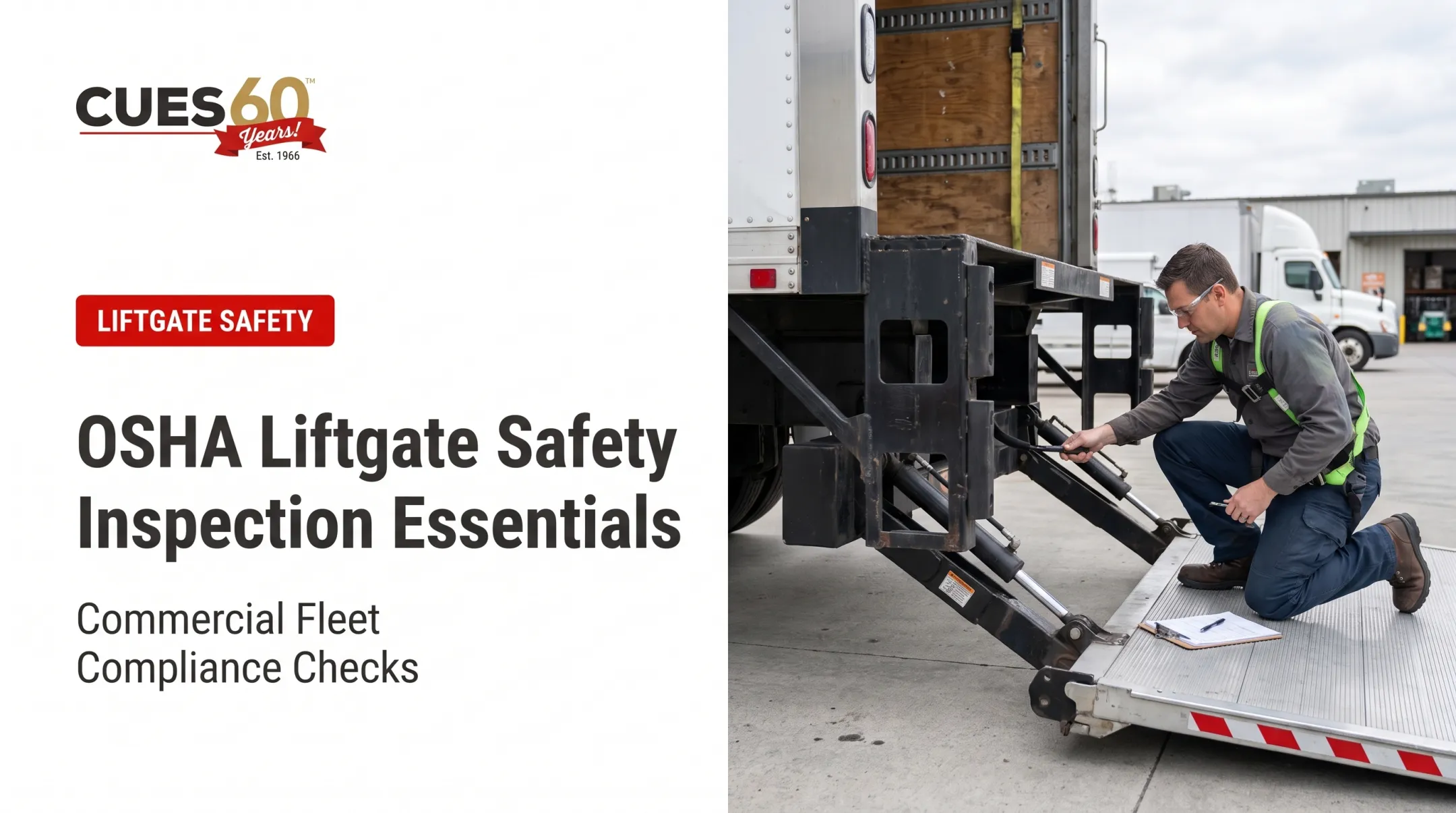
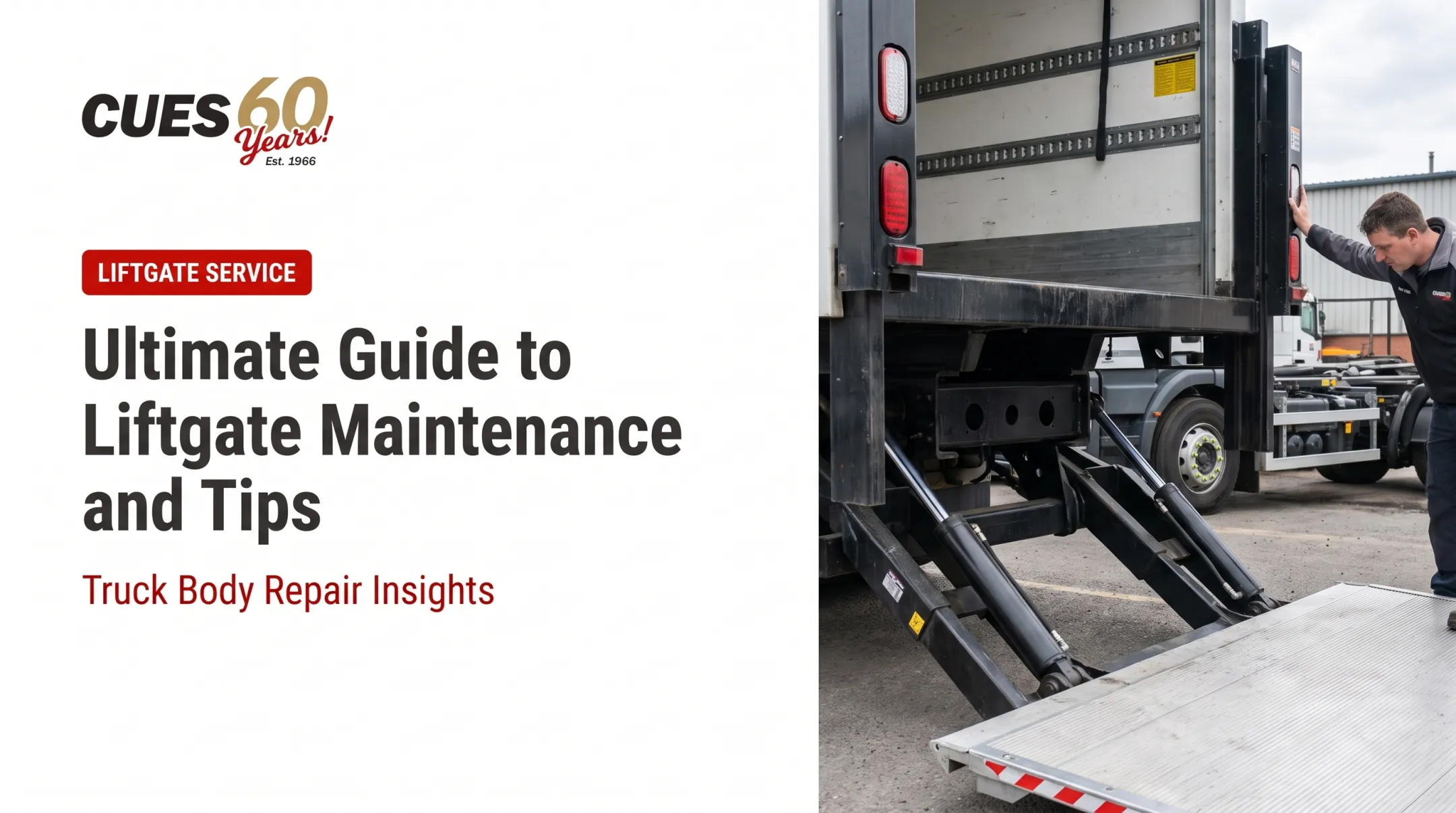
- Inspect the platform, flipover panel, and parallel arms for cracks, bends, or misalignment.
- Check mounting bolts, fasteners, and welds for looseness or stress fractures.
- Examine locking and latch mechanisms for rust, debris, or misalignment.

Pros: Fast and requires no special tools. Cons: Won't catch internal hydraulic or electrical faults.
Method 2: Operational Cycle Test
Run the gate through a full raise/lower cycle and pay attention to speed, sound, and responsiveness.
Steps:
- Engage the control switch and watch how evenly the platform rises and lowers.
- Listen for grinding, clicking, or screeching sounds during operation.
- Confirm the gate stows fully and securely afterward.
Pros: Reveals real-world performance issues. Cons: The gate must already be operational enough to cycle.
Method 3: Hydraulic and Electrical Diagnostic Check
This is the most precise method for finding root causes, though it takes more technical know-how.
Steps:
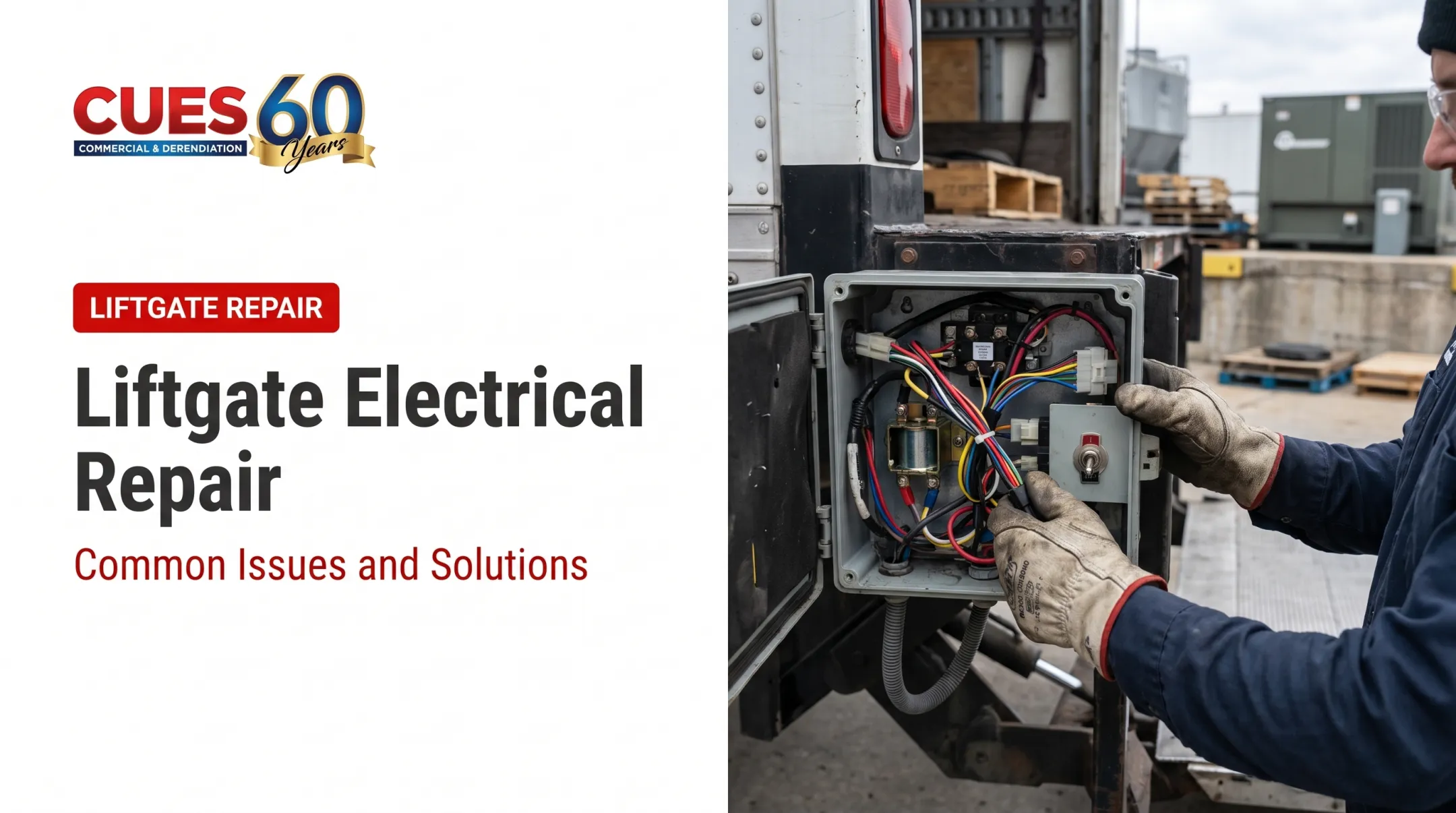
- Check hydraulic fluid level and color with the gate fully lowered; inspect hoses and fittings for leaks.
- Test battery terminals and control switch wiring for corrosion or loose connections using a multimeter.
- Inspect solenoids and valves for proper engagement when the switch activates.
Pros: Most precise way to find root causes. Cons: Requires more technical skill and tools.

Fluid specifications vary by manufacturer and model. Some gates require ATF; others explicitly prohibit it. Always check the specific gate's manual rather than assuming one fluid type fits all liftgates.
How to Interpret the Results
Misreading these signs risks two costly outcomes: unnecessary repairs on a healthy gate, or an in-field breakdown on one that needed attention weeks ago.
| Result | Signs | Action |
|---|---|---|
| Normal | Clear fluid at proper level, smooth even lift speed, no corrosion, secure locks | Continue routine schedule |
| Minor Issue | Slight fluid discoloration, minor hose weeping, small corrosion spots, slightly uneven lift | Schedule near-term maintenance before next haul |
| Out-of-Spec | Active leaks, grinding/screeching noise, unresponsive switches, cracked welds, loose locking hardware | Take out of service immediately; get professional repair |
Manufacturer manuals often describe healthy operation as smooth, even, and "reasonably quiet" — unusual noise or vibration is a documented no-use condition across multiple OEMs, not just an annoyance to note and ignore.

Common Errors in Checking a Liftgate
Small process mistakes cause fleets to miss real problems. Watch for these:
- Checking fluid while the gate is raised: produces a false low reading every time
- Skipping the operational cycle test and trusting a visual walk-around alone
- Treating minor squeaks or slow movement as "normal wear" instead of investigating
- Ignoring locking mechanisms because they sit outside the lifting function itself
Each of these shortcuts feels harmless in the moment. Over months of repeated daily checks, they leave a fleet with a gate that fails at the worst possible time.
Safety and Best Practices
Liftgate inspection involves real hazards: pinch points, stored hydraulic pressure, and electrical components. One OSHA-documented case involved a worker's finger caught in a pinch point on a truck-mounted automatic gate, resulting in hospitalization and amputation.
Investigators found no warning labels near the controls and no evidence of proper hazard instruction.

Before any inspection:
- Chock wheels and engage the parking brake
- Never stand under a raised platform; use safety chains or jack stands if servicing a stuck gate
- Wear gloves and eye protection when handling hydraulic fluid or electrical components
- Disconnect power before servicing electrical or hydraulic components
Keep a documented inspection log for each liftgate so you can spot recurring issues over time.
Treat a failed inspection as a release-to-use decision. If something's out of spec, that truck doesn't load until a qualified technician clears it.
Partnering for Reliable Equipment Uptime
Consistent liftgate inspection is easier to sustain with a service partner built around this equipment. CUES, Inc. has served fleets across New England and New York since 1966, with locations in Amherst, New Hampshire, and North Franklin, Connecticut.
For liftgate-equipped vehicles, CUES offers:
- Hydraulic liftgate and cylinder repair/replacement
- Electrical troubleshooting and repair
- Routine liftgate maintenance
- Mobile, on-site safety inspections
- Road service from fully stocked trucks to cut downtime

Whether you run a bucket truck fleet or heavy-duty utility vehicles, a provider that can send a service truck to your site keeps loading and unloading on schedule. That beats waiting on a tow and losing a full shift to downtime.
Frequently Asked Questions
What are the main points of a commercial liftgate visual inspection?
A visual inspection covers the platform, hinges, welds, and locking hardware for damage, plus hydraulic hoses for leaks and control switches for responsiveness. Do this before every use, not just during scheduled service.
What is the difference between a tailgate and a liftgate?
A tailgate is a fixed panel that closes off the truck bed. A liftgate is a powered hydraulic or electrical mechanism that raises and lowers cargo between ground level and bed height.
How often should a liftgate be inspected?
Do a quick visual and operational check daily before use. Follow up with more thorough weekly and monthly inspections, especially for gates in heavy daily service.
What are early warning signs that a liftgate needs repair?
Watch for slow or uneven lift speed, unusual clicking or grinding sounds, and any visible fluid leaks around hoses or fittings. Address them promptly before a breakdown stops your route.
Can I inspect a liftgate myself, or do I need a professional?
Basic visual and operational checks are fine to handle in-house. Hydraulic and electrical diagnostics, along with any actual repairs, are best left to trained technicians.
Why is preventive liftgate maintenance important for fleet operations?
It reduces unplanned downtime, extends the equipment's working life, and keeps loading and unloading operations safe for your crew.