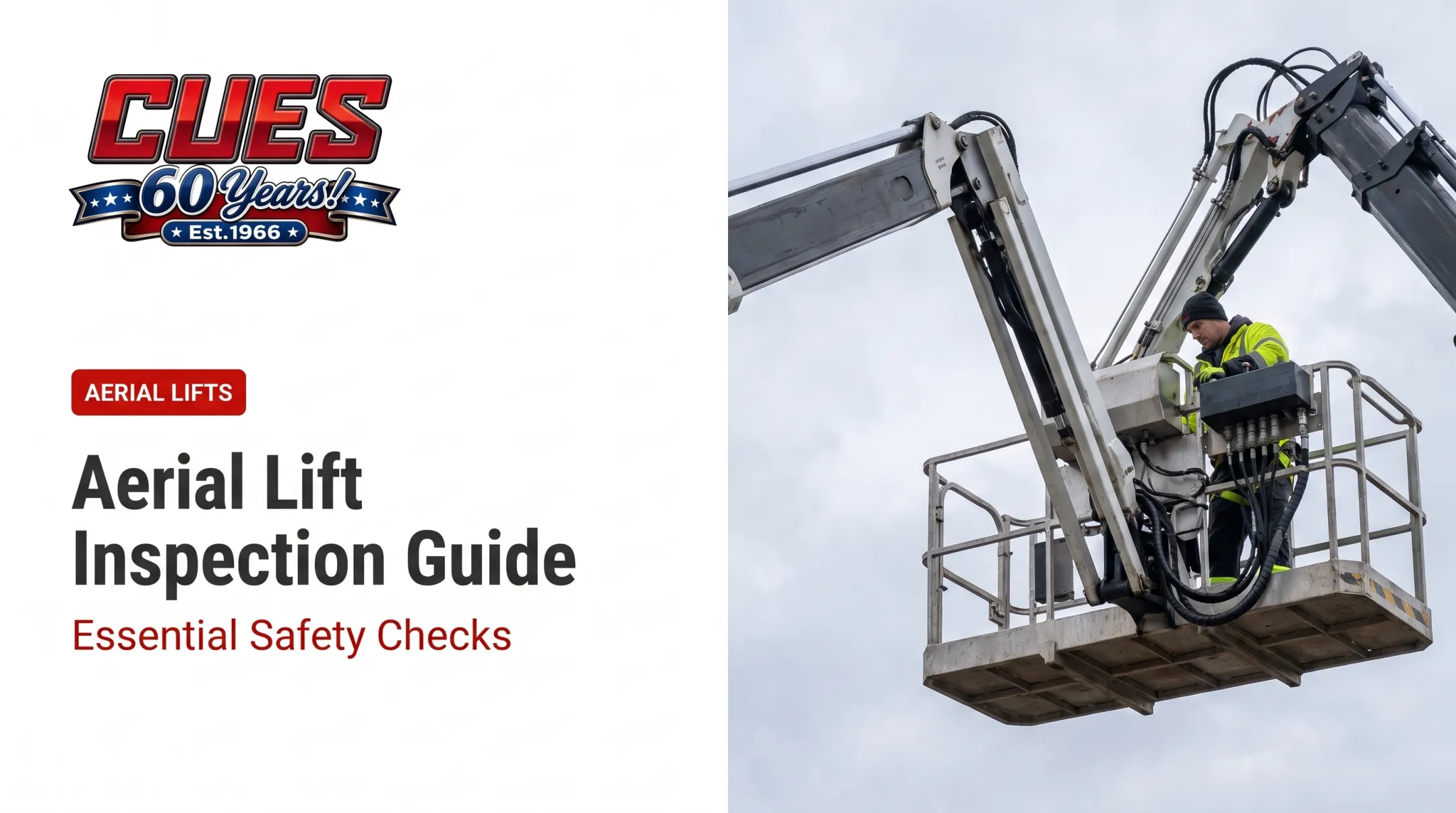

For utility crews, construction contractors, and field service operations, a poorly inspected crane isn't just a safety risk. It's an OSHA violation waiting to happen, a liability claim in the making, and a guaranteed source of downtime when equipment fails mid-job.
This guide breaks down exactly who's allowed to inspect a crane, what you need on hand before you start, the three inspection types and their step-by-step methods, and how to read the results once you're done.
TL;DR
- Crane inspections run on daily/shift, monthly, and annual cycles, each with different depth and paperwork
- Only a competent person or qualified person (per OSHA) may inspect, based on inspection type
- OSHA 1926 Subpart CC, 1910.179, and 1910.180 govern most crane inspection rules
- Deficiencies must be fixed or the crane pulled from service immediately
- Outsource to a qualified inspector when you lack a competent or qualified person in-house
What You Need to Conduct a Crane Inspection
A thorough inspection isn't just a walk-around with your eyes half open. You need the right tools, the right documentation, and clear access to the parts of the crane you're checking.
Tools and Documentation Required
- Visual inspection checklist matching the applicable OSHA standard
- Flashlight or inspection light for shadowed areas (booms, drums, hydraulic lines)
- Calipers or diameter gauges for wire rope wear measurement
- Torque wrench for structural and mast bolts
- Grease gun and lubrication reference chart
- Load chart for verifying capacity ratings
Preconditions and Setup
Before touching any moving or electrical component:
- De-energize or stabilize the crane. Never inspect live hydraulics or powered controls without proper isolation.
- Position the crane on stable, level ground with clear sightlines to the boom, hook, and wire rope.
- Pull the last three monthly inspection reports before an annual inspection. They reveal wear and defect patterns you'd otherwise miss.
Who Can Perform Crane Inspections
OSHA draws a hard line between two roles. A competent person can identify hazards and has the authority to correct them on the spot. A qualified person has documented training, certification, or extensive hands-on experience that lets them resolve technical problems tied to the equipment under 29 CFR 1926.1401.
CMAA Specification 78-2.2.1 sets a higher bar for overhead crane inspectors: 2,000+ hours of relevant field experience. Inspectors also need formal training in codes such as ASME B30 and OSHA standards, plus solid documentation skills.
In practice:
- Daily/shift inspections — operators or any competent person on-site
- Monthly inspections — also a competent person, but documented
- Annual/comprehensive inspections — must be a qualified person, often a certified inspector
Not every operation keeps a qualified inspector on staff. An equipment dealer with service capability can fill that gap.
CUES, Inc. provides road service and shop-based maintenance across New England. Factory-trained technicians handle repair and inspection on Auto Crane and LiftMore units, plus service-crane installation, when you need a second set of qualified eyes.
Types of Crane Inspections and Methods
Inspection frequency and depth shift based on OSHA classification and crane duty cycle. OSHA groups inspections by interval and scope as follows.
Daily/Pre-Shift Inspections
A visual check by a competent person before each shift begins.
Tools needed: Checklist covering controls, hooks, wire rope, hydraulics, tires.
Steps:
- Walk around the crane checking for visible damage or fluid leaks
- Test controls and safety devices for proper function
- Inspect hooks, latches, and rigging for deformation
Trade-off: Fast and mandatory daily, but it only catches what's visible or operational—not hidden wear.

Monthly Inspections
A documented visual inspection that repeats the daily checklist and adds structural items.
Tools needed: Checklist, camera for documentation, torque wrench for tower crane bolts.
Steps:
- Repeat the full daily inspection checklist
- For tower cranes, check mast and structural bolts, plus tie-ins
- Document findings and retain records for at least three months per 1926.1412
Trade-off: Creates a paper trail, but it's still mostly visual—not exhaustive.
Annual (Periodic) Inspections
A comprehensive inspection by a qualified person, covering structural, mechanical, and electrical systems.
Tools needed: Full diagnostic equipment, load testing tools, disassembly tools as needed.
Steps:
- Review the previous monthly inspection records for recurring issues
- Inspect brakes, booms, bearings, hoses, pumps, and drums for wear or damage
- Run functional and load testing, then document findings with signature and date—retain for at least 12 months per 1926.1412
Trade-off: Most thorough method available, but it requires certified expertise and more downtime.

If an annual inspection finds a failed hydraulic cylinder or worn component, it must be repaired before the crane returns to service. Cues Inc. provides crane repair, hydraulic cylinder repair, and custom fabrication for issues inspections commonly uncover.
How to Interpret Inspection Results
Misreading results is how a hidden hazard turns into equipment failure or a jobsite injury. Break results into three buckets:
| Result | What it looks like | Action |
|---|---|---|
| Normal/Acceptable | No visible wear, cracks, or leaks; controls respond correctly | Clear crane for continued use |
| Minor Issues | Slight wear within tolerance, minor fluid seepage, small deformation | Log it, monitor at next inspection |
| Out-of-Spec | Cracks, frayed wire rope, non-functioning safety devices, structural deformation | Remove from service immediately, schedule repair |
For wire rope specifically, OSHA 1926.1413 sets hard numbers: six randomly distributed broken wires in one rope lay, or diameter reduction greater than 5% of nominal, both trigger removal from service. There's no gray area once you hit those thresholds.

Common Errors in Crane Inspections
Even experienced crews fall into predictable traps:
- Skipping documentation on monthly inspections, leaving no compliance trail when OSHA requests records
- Missing components only visible during operation, including electrical or hydraulic issues that a stationary crane won't reveal
- Overlooking tower crane-specific checks like tie-ins and structural bolts
- Letting non-qualified personnel handle annual inspections, which invalidates the entire compliance record
Safety and Best Practices
Lockout/tagout (LOTO) procedures come first, every time, before you touch moving or electrical components.
- Confirm the crane sits on stable, level ground before beginning
- Wear PPE (gloves, hard hat, safety glasses) for the entire inspection
- Keep components clean and free of debris; grime hides cracks and throws off visual checks
Conclusion
Accurate, well-documented crane inspections protect your crew and keep your operation on the right side of OSHA. That means getting the frequency right, putting the right person on the job, and keeping records that hold up if anyone asks to see them.
If your team doesn't have a qualified inspector in-house, or you need backup when equipment goes down, CUES, Inc. provides inspection, maintenance, parts, and road service across New England and New York to help you stay inspection-ready without adding headcount.
Frequently Asked Questions
How much does a crane inspection cost?
Costs vary by crane type, inspection scope (monthly/periodic vs. annual comprehensive), and whether work is done in-house or by a third party. Ask a qualified inspector for a quote tied to your equipment and duty cycle.
How often does a crane need to be inspected?
At minimum: daily/shift, monthly, and annual inspections. Severe-service cranes need more frequent checks.
What is the OSHA standard for crane inspection?
Construction falls under 29 CFR 1926 Subpart CC. General industry overhead and mobile cranes fall under 29 CFR 1910.179 and 1910.180.
Who should inspect a crane?
Competent persons handle daily and monthly checks. Qualified, certified inspectors must handle annual comprehensive inspections.
What happens if a crane fails an inspection?
It gets tagged and pulled from service until deficiencies are corrected and re-inspected before returning to use.
Do inspection records need to be kept on file?
Yes. Monthly records should be retained for at least three months; annual inspection documentation for at least a year.