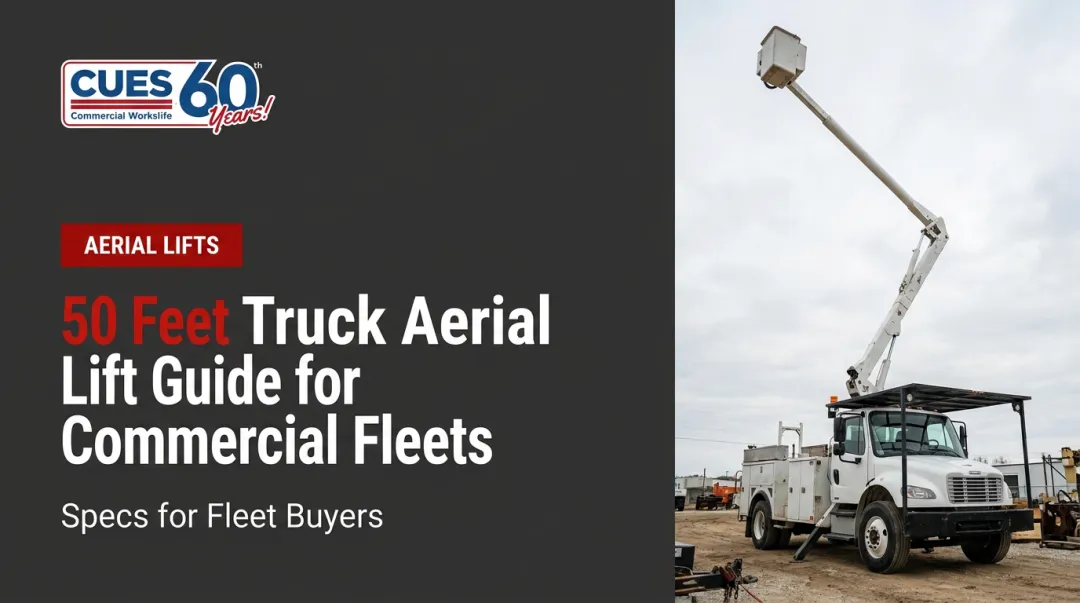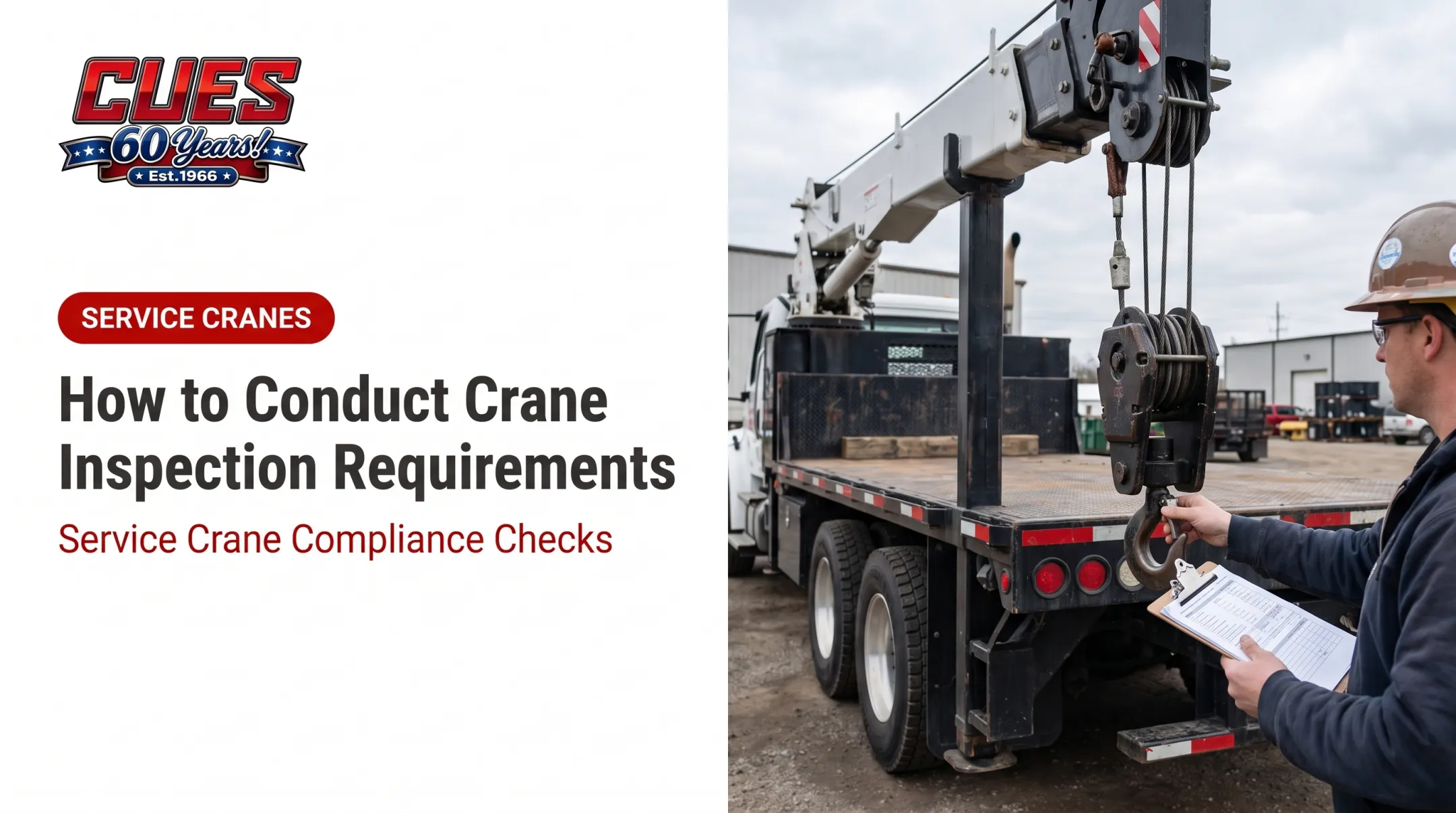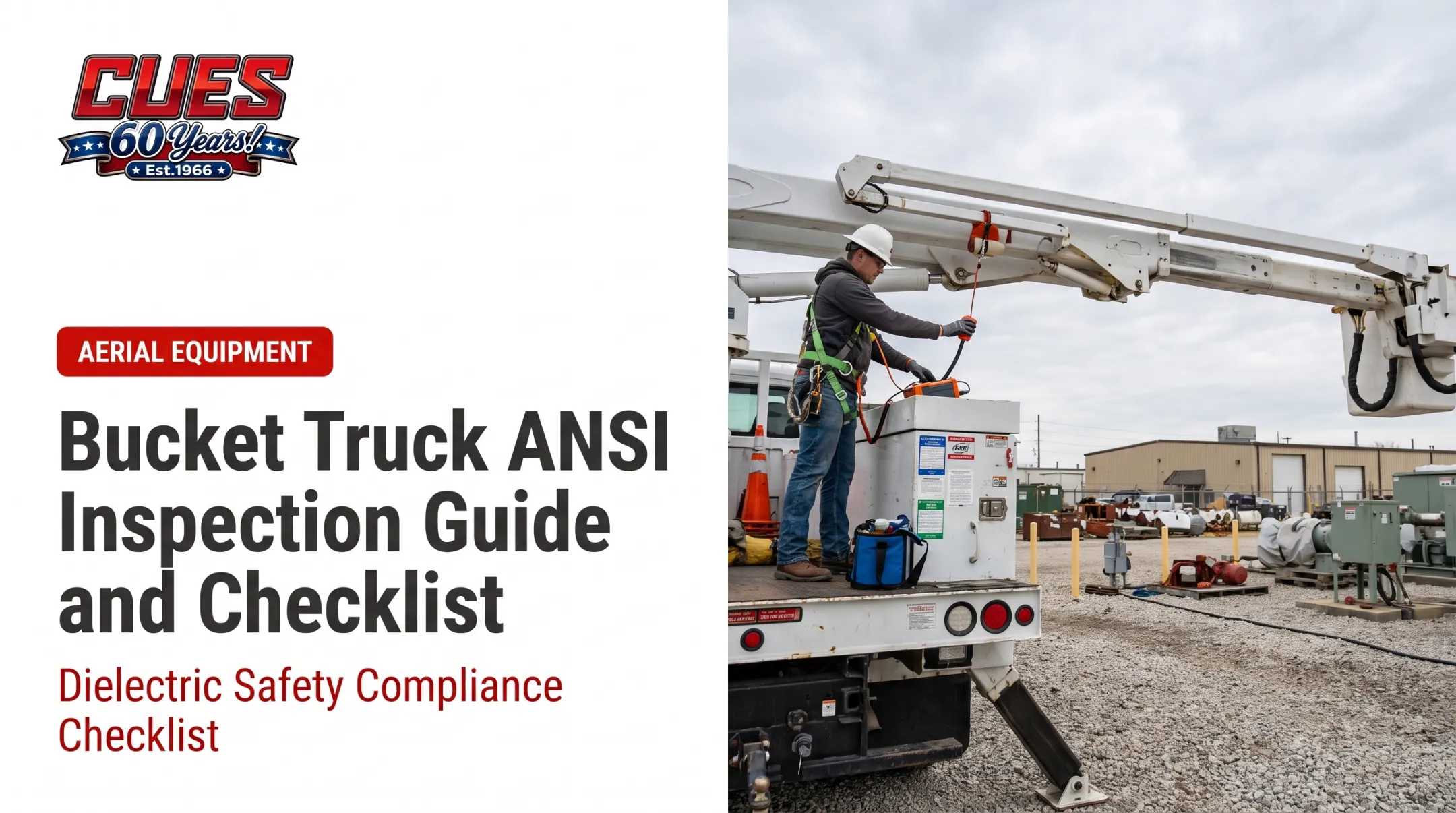

Skipped or rushed inspections lead to falls, tip-overs, and mechanical failures. NIOSH data covering 2011-2014 found 1,380 injuries and 87 deaths involving aerial lifts and scissor lifts, with slips, trips, and falls accounting for 360 injuries and 48 deaths in that window (CDC/NIOSH).
This guide breaks down the required inspection types, walks through what to check before every shift, and explains how to read your results so you know when a lift is safe and when it needs to come off the job.
Key Takeaways
- Aerial lifts require pre-use, frequent, periodic, and annual inspections under OSHA and ANSI A92.2
- A thorough inspection covers visual checks, function tests, and the surrounding work zone
- Operators handle daily/frequent checks; qualified technicians handle periodic, major, and post-event inspections
- Skipping inspections risks OSHA citations, injuries, and unplanned equipment downtime
What You Need to Inspect an Aerial Lift
Before you touch a single lever, gather your tools. A rushed inspection without the right equipment misses problems.
Tools and Equipment Required
- Manufacturer's operator manual (specific to your model)
- Visual inspection checklist
- Flashlight for checking dark compartments and undercarriage areas
- Fluid level gauges or dipsticks
- Required PPE (harness, hard hat, gloves)
Preconditions and Setup
Set the lift on level, stable ground, clear of overhead lines, ditches, and slopes. Keep power off for the visual walkaround, then power on for function testing.
A few non-negotiables before starting:
- Confirm adequate lighting to spot cracks, leaks, or corrosion
- Clear the work zone of bystanders and debris
- Lock out power sources during the visual phase to avoid accidental movement
The 5 Aerial Lift Inspection Classifications (ANSI A92.2)
ANSI/SAIA A92.2-2021, the current standard governing vehicle-mounted aerial devices, defines five inspection types by frequency and depth (ANSI). Knowing which one applies, and when, keeps you compliant and your crew safe.
Initial Inspection and Test
Performed by the manufacturer or dealer before a lift's first use. It confirms the unit meets A92.2 requirements straight out of the factory.
Frequent Inspection and Test
This is your daily, before-first-use walkaround plus a function test. OSHA requires controls to be tested each day before use under both 29 CFR 1910.67 (general industry) and 29 CFR 1926.453 (construction). Any trained operator can perform this check.
Periodic Inspection or Test
A deeper inspection typically runs annually, though intervals can range from 1–12 months by component type.
This is also when dielectric testing on insulated lifts happens. If testing lapses beyond 12 months, the equipment is no longer considered insulating, per industry technical guidance (Incident Prevention). Only a qualified technician can perform this level of inspection.
Major Structural Inspection
Required after 15 years of service, then every 10 years after that. It includes load testing plus detailed weld, structure, and mounting-point checks. This one demands specialized equipment and expertise, not a shop-floor glance.
Post-Event Inspection or Test
Mandatory after any collision, tip-over, or overload event. If a lift experiences stress beyond its rated design, it must be removed from service and inspected before returning to work. No exceptions.

Step-by-Step Pre-Use Inspection Checklist
This is the inspection every operator runs before climbing into the platform. It has three parts: visual, function, and work zone.
Visual Inspection
Walk the entire machine, top to bottom:
- Check fluid levels, battery charge, and leaks
- Inspect structural components for cracks, corrosion, or deformation
- Confirm decals and operator manual are present and legible
- Examine hydraulic hoses, wiring, wheels, tires, guardrails, and fasteners for damage
Function Test
Test ground controls first, then platform controls:
- Ground controls - emergency stop, tilt sensor (if equipped), and auxiliary controls
- Platform controls - emergency stop, horn, brakes, drive, steering, and boom functions
Never skip the ground-level test before climbing in. If a control fails at ground level, you just avoided testing it 40 feet up.
Work Zone Inspection
Survey the area around the lift before setup:
- Drop-offs, slopes, and unstable ground
- Debris and other ground-level obstacles
- Overhead power lines and clearance hazards
- Weather conditions that affect stability or visibility
- Unauthorized personnel in the work zone
A lift can pass every mechanical check and still be unsafe if it's set up next to an unmarked trench.

How to Interpret Inspection Results
Misreading your results is almost as dangerous as skipping the inspection. There are three outcomes:
- Normal/Acceptable: Controls respond correctly, no leaks or damage found. Log the confirmation and proceed with the job.
- Minor Issues: Small wear, minor fluid seepage within tolerance. Note it, monitor it, and flag it for the next periodic check.
- Out-of-Spec: Failed controls, structural cracks, hydraulic leaks, or damaged safety devices. Remove the lift from service immediately, tag it out, and get a qualified technician involved.
Don't talk yourself into "it's probably fine." A hairline crack today is a structural failure waiting for the wrong load next week.
Common Errors and Safety Best Practices
Most aerial lift incidents trace back to a handful of repeatable mistakes:
- Skipping the lower-control function test before entering the platform
- Missing hidden damage to insulated components that reduces dielectric protection
- Failing to stabilize the lift on level ground or forgetting wheel chocks on inclines
- Overlooking PPE, including harness and lanyard tie-off
- Exceeding rated load capacity
Prevent these failures with a full pre-use checklist every shift, confirmed level setup before boom work, and a hard stop on any failed test or visible defect.
When an inspection turns up a hydraulic leak, a cracked weld, or a failed dielectric test, take the unit out of service. An authorized dealer can close that gap fast.

CUES, Inc. services Versalift, Elliott, and Auto Crane aerial devices across New England and New York. Certified technicians handle ANSI bucket truck inspections, dielectric aerial boom testing, hydraulic cylinder and line repair, and aerial boom repairs. Fully stocked road-service trucks can come to the jobsite when a lift fails inspection mid-project and you can't afford a week of downtime.
Conclusion
Consistent pre-use, frequent, periodic, and post-event inspections are what keep operators upright and crews safe. Skipping a step doesn't save time. It just moves the risk to a moment when you're least prepared for it.
Accurate readings and prompt corrective action prevent failures that cost far more than the inspection itself: injuries, downtime, and equipment replacement. Follow your manufacturer's manual, take out-of-spec results seriously, and partner with a qualified service provider when repairs are needed. If you're due for an ANSI inspection or a repair, contact CUES, Inc. at 800-258-1010 or through the online service request form.
Frequently Asked Questions
When should aerial lifts be inspected?
Inspect aerial lifts before each use, on a frequent schedule (daily to monthly based on use), and periodically (typically annually). Also inspect after any accident or extended time out of service.
What are the OSHA inspection requirements for aerial lifts?
OSHA requires daily control testing under 29 CFR 1910.67 and 1926.453, and references ANSI A92.2 for more detailed inspection procedures and electrical testing.
What are the ANSI standards for aerial lifts?
ANSI/SAIA A92.2-2021 governs vehicle-mounted aerial devices, defining inspection types, intervals, and requirements for design, testing, and operation.
What are the 5 aerial lift inspection classifications?
The five classifications are:
- Initial — pre-first-use, by the manufacturer
- Frequent — daily walkaround
- Periodic — annual in-depth check
- Major Structural — after 15 years, then every 10 years
- Post-Event — after any accident or overload
Who is qualified to perform aerial lift inspections?
Trained operators can perform frequent and pre-use inspections. Periodic, major structural, and post-event inspections require a qualified technician.
What happens if an aerial lift fails inspection?
Remove it from service immediately, tag it out, and have a qualified technician complete repairs before it returns to work.